There is something I would like to ask our politicians in Oyo State: what is the ratio of politicians to the electorate?
You may not even make up 10% of the population, or perhaps even less.
Let me use the Ministry of Power as an example.
The Federal Ministry of Power in Nigeria supervises six major agencies and parastatals responsible for regulating, operating, and managing the power sector. These organizations oversee transmission, rural electrification, regulation, training, and liability management to ensure stable electricity supply.
Core agencies under the Federal Ministry of Power include:
Nigerian Electricity Regulatory Commission (NERC): The independent regulator for the Nigerian Electricity Supply Industry (NESI).
Transmission Company of Nigeria (TCN): Responsible for operating, maintaining, and developing the national grid.
Rural Electrification Agency (REA): Promotes and supports access to electricity in rural communities.
Nigerian Electricity Management Services Agency (NEMSA): Enforces technical standards and regulations for electrical installations.
Nigerian Electricity Liability Management Company (NELMCO): Manages the stranded liabilities of the defunct PHCN.
National Power Training Institute of Nigeria (NAPTIN): Provides human capacity development and training in the power sector.
Any minister assigned to this ministry has abundant opportunities to accommodate party leaders in his state by awarding small contracts, especially in rural electrification projects, to help sustain them politically and economically.
Political leadership is not about boasting of having billions in your account. It is about carrying your party members along—from the ward level to the state level.
The Ministry of Power arguably has one of the largest volumes of small-scale contracts that can be strategically used to strengthen and oil the party structure in a state more than many other ministries in this administration.
To be honest, a versatile grassroots politician would have transformed his party into a formidable force and an unavoidable presence in his state.
Local politicians are the real canvassers because they are closest to the electorate. Whatever support they receive from the centre is what they use to sustain their followers, support their families, and maintain political relevance at home.
But if leaders at the centre are not supporting and oiling the party structure at the state level, how can that political party survive in such a state?
I believe politics requires experience, and politicians must naturally be givers—people who are generous and willing to listen to their supporters.
To my surprise, many of these stingy politicians were with Baba Adelabu and witnessed firsthand how Baba shared whatever he had with his people.
Politics is not about me and my family. It is not about boasting about how rich you are or how magnificent your house is.
Politics is about looking back with satisfaction and saying, at least I gave back half of what I benefited from the centre or the state to my followers and society.
I am not boasting, but if I were a politician, it would be difficult for anyone to defeat me in any election because, to me, there is no politician without happy followers.
Coming home every four years to campaign, or renting hungry-looking crowds to welcome you back to your state, is not politics—it is political enslavement.
I respect politicians when I observe how their followers and core supporters are dressed and how they live.
Oyo State APC politicians should change their ways and begin to consider the welfare of their followers.
People approach you for contracts worth less than N5 million, and you tell them, as a minister, to wait until you become governor.
Haba! That is very sad, and perhaps you should consider another profession.
Politics is not an accounting firm where you calculate everything that comes in and everything that goes out.
Politics is about selfless service—putting yourself forward to serve and care for a multitude of people.
As our fathers used to say: “Ahun ki se oselu, afoju ki se tailoring.”
Nkan to wa nile yi to yin pin, eberu olorun!
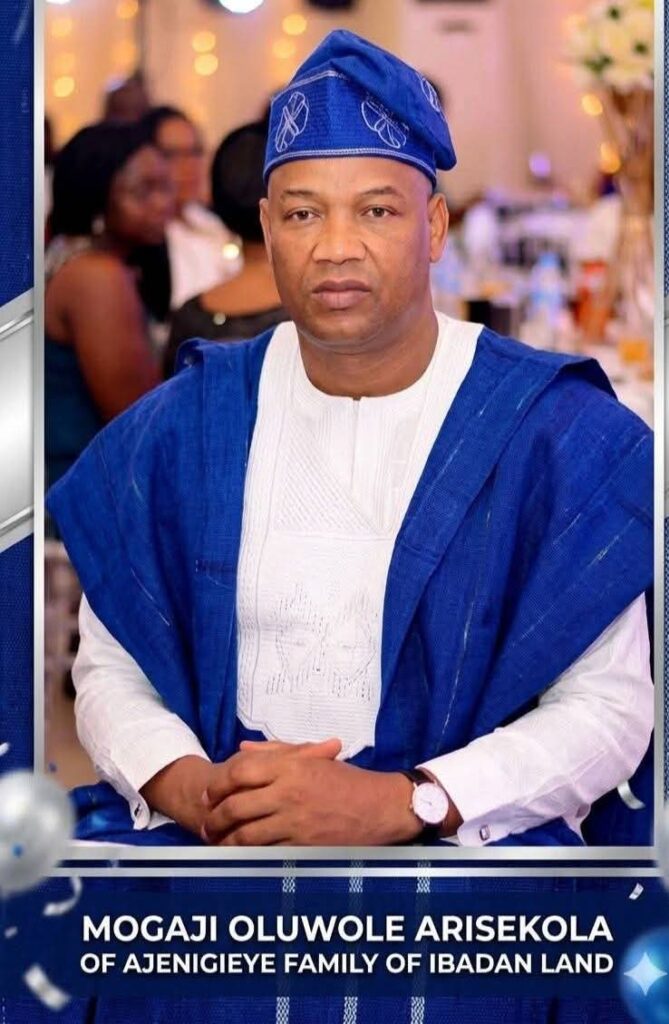
Mogaji Wole Arisekola writes from Ibadan.